Grass Is Greener on the Western Server: Why Korean Gamers Are Ditching Their Own MMOs
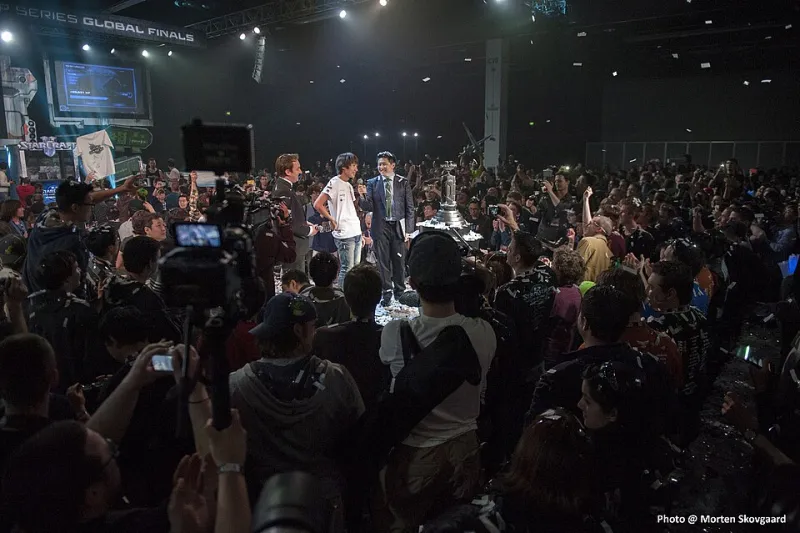
Photo: Morten Skovgaard, CC BY 2.0, via Wikimedia Commons
For a long time, the assumption in gaming circles was pretty straightforward: Korean players play Korean games. The country that basically invented the modern MMORPG, that turned PC bangs into cultural institutions, and that launched franchises like Lineage and MapleStory into global icons — why would those players ever look elsewhere? Turns out, they have plenty of reasons. And the trend is reshaping how publishers on both sides of the Pacific think about their audiences.
The Monetization Wall Nobody Wants to Talk About
Ask any Korean gamer in their mid-to-late twenties why they drifted away from titles like Lineage W or Lost Ark's domestic version, and the conversation almost always lands on the same word: pay-to-win. Korean mobile and PC MMOs have historically leaned hard into aggressive monetization — gacha systems, enhancement scrolls with brutal failure rates, and gear treadmills that essentially require real-money investment to stay competitive.
For older players who grew up grinding through these systems, it was just the cost of doing business. But for the generation that came up watching Western streamers on Twitch and YouTube, the comparison became impossible to ignore. Games like Final Fantasy XIV, Guild Wars 2, and even World of Warcraft — whatever its flaws — offer a fundamentally different promise: pay a flat fee, get the content. No hidden walls, no surprise charges when your +15 weapon breaks.
"It's not that Korean games are bad," said one Korean streamer who goes by the handle Neondori, speaking to KR2 Forum through a translator. "It's that I got tired of feeling like the game was designed to take my money more than it was designed to be fun. FFXIV doesn't feel like that. It feels like someone made it because they loved the genre."
That sentiment is showing up across Korean gaming communities, from DC Inside forums to Naver gaming cafes. The fatigue is real, and it's generational.
The Battle Royale Bridge
If MMOs represent the slow burn of this shift, battle royales are where it really caught fire. PUBG was technically a Korean success story — Krafton is a Korean company — but the game's design philosophy was decidedly Western, and it opened a door. Korean players who might never have touched a Western RPG found themselves comfortable in a genre that didn't punish them for not spending money.
From there, the pipeline to Fortnite, Apex Legends, and Warzone wasn't a huge leap. These games are free, they're skill-based in ways that feel fair, and their cosmetic-only monetization models don't gate competitive performance behind a credit card. For Korean players burned out on domestic monetization structures, that was practically revolutionary.
Industry analyst Junho Park, who tracks player migration patterns for a Seoul-based market research firm, put it bluntly: "The younger Korean gaming demographic has more in common with a 22-year-old in Dallas or Toronto than they do with a 35-year-old Korean player who's been in the same Lineage guild for a decade. The generational divide in Korea is sharper than most Western observers realize."
Western Publishers Finally Doing Their Homework
Here's the flip side of this story, and it's one that should genuinely excite US gaming fans: Western publishers are starting to figure out how to actually market to Korean players. For years, the approach was basically "translate the UI and hope for the best." That didn't work. Korean players aren't just looking for localization — they want games that respect their time, their skill, and their intelligence.
Blizzard's handling of Overwatch 2's Korean community, for all the game's controversies, showed some genuine growth in this area. Riot Games, which has deep Korean roots through its League of Legends infrastructure, has been particularly savvy — treating Korean players as tastemakers rather than an afterthought. When Riot drops a new game, they're not just translating it for Korea; they're building around Korean community feedback from day one.
The result? Games like Valorant have found real footing in Korea, competing directly with domestic titles for player hours. That would have seemed impossible ten years ago.
The Old Guard Isn't Going Anywhere
None of this means Korean MMOs are dying. Let's be clear about that. Lineage still generates staggering revenue. MapleStory retains a deeply loyal fanbase that treats the game more like a social club than a competitive product. And newer titles like Lost Ark found genuine audiences in both Korea and the West simultaneously — even if Western players often got a less aggressive version of the monetization.
What's changing is the monopoly. Korean games used to be the default for Korean players. Now they're one option among many, and they're competing on the same terms as everyone else. For players, that's a win. For developers, it's a wake-up call.
The Korean gaming market is still one of the most valuable and influential in the world. But the players inside it are more cosmopolitan, more informed, and more willing to switch servers than any previous generation. Western publishers who've been dreaming of cracking Korea for years might finally be getting their moment — not because they figured out Korea, but because Korea figured out them first.