Why Korean Gaming Communities Don't Tolerate Your Nonsense (And What NA Can Do About It)
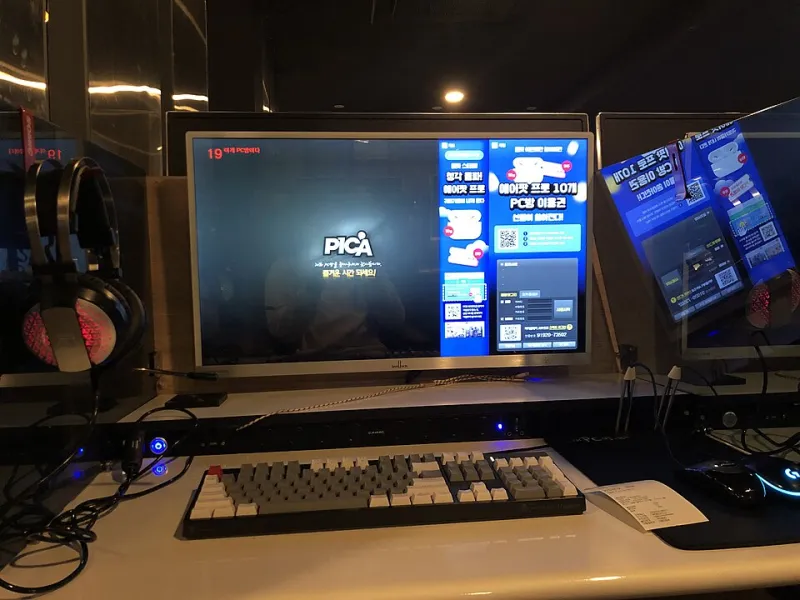
Photo: MatthieuRicard, CC0, via Wikimedia Commons
If you've spent any real time in North American online gaming spaces, you already know the drill. Someone flames a teammate in champion select, the game spirals into a 40-minute grudge match full of intentional feeding and slurs in all-chat, and the post-game report button feels about as useful as shouting into a parking garage. It's exhausting, and the conversation around fixing it goes in circles every few months before everyone gives up and logs back in.
Meanwhile, Korean gaming culture has been running a different experiment for the better part of two decades — and the results are hard to ignore.
That's not to say Korean servers are some utopian paradise of good vibes. They're not. But the infrastructure surrounding competitive gaming in Korea operates on a set of social and institutional standards that make the NA approach look like it was designed by someone who's never actually played a ranked game.
The PC Bang Effect: Social Accountability in Real Space
To understand why Korean gaming culture handles toxicity differently, you have to start with the PC bang. These aren't just internet cafes — they're semi-public gaming spaces where your behavior has immediate, real-world consequences. You're sitting next to other players. Staff are present. The anonymity that lets someone in a suburban American bedroom go completely unhinged simply doesn't exist in the same way.
PC bangs have been central to Korean gaming culture since the late 1990s, and that physical context shaped behavioral norms that persisted even as gaming moved into private homes. The expectation that competitive gaming is a shared, observable activity — not something you do in total isolation — created a baseline of social accountability that Western gaming culture never really had to develop.
When Korean players eventually moved to home setups, they carried those expectations with them. The community memory of "this is how you behave" had already been established.
Real-Name Verification and the End of Throwaway Accounts
Korea's online gaming ecosystem operates under a national real-name verification system tied to resident registration numbers. Practically speaking, this means that creating a fresh smurf account to dodge bans is significantly harder than it is in NA. When your account is linked to your actual identity, the cost of getting banned goes up considerably.
This is a controversial topic, and worth acknowledging upfront — real-name systems come with genuine privacy concerns and have faced criticism from civil liberties advocates in Korea itself. It's not a model that would translate cleanly to the US, where identity-linked gaming accounts would face serious political and legal pushback.
But the underlying principle — that consequences need to feel real and sticky to change behavior — is something NA game publishers have mostly refused to take seriously. Riot Games experimented with phone number verification for ranked mode, which was a small step in this direction, but enforcement remains inconsistent.
How Korean Esports Orgs Set the Tone From the Top
One thing Korean esports organizations do remarkably well is treat behavioral standards as part of their brand identity, not just an HR checkbox. When a pro player from a major Korean org gets caught being toxic on stream or in ranked play, the organizational response tends to be swift and public. Fines, suspensions, mandatory public apologies — these aren't rare events, they're part of a known and expected accountability structure.
This matters because it sends a clear message to the broader player base about what competitive gaming culture is supposed to look like. Korean fans are watching these pros closely, and when organizations hold players accountable in visible ways, it reinforces community norms at every level of play.
Compare that to NA, where pro player misconduct often results in a vague tweet from a team's social media account and a two-week bench that somehow turns into a roster return three weeks later. The accountability theater is obvious, and the community reads it that way.
Community Reporting That Actually Does Something
Korean game publishers — particularly Nexon, Netmarble, and NCSOFT — have invested more heavily in active moderation infrastructure than most of their Western counterparts. Reporting systems in Korean titles tend to result in faster response times, more transparent outcomes, and visible consequences that players can actually observe.
When you report someone in certain Korean MMOs, you'll sometimes receive a follow-up notification letting you know action was taken. That feedback loop matters more than it sounds. In NA, the standard experience is reporting someone and receiving total silence, which makes the entire system feel performative.
Some Korean gaming communities also operate guild and clan-level reputation systems, where persistent toxic behavior can get players blacklisted from high-level content groups. This social enforcement layer exists alongside official reporting, creating overlapping consequences for bad actors.
So Why Hasn't NA Copied Any of This?
Honestly? A mix of reasons, some practical and some just convenient excuses.
The real-name verification approach is genuinely incompatible with American legal and cultural norms around privacy. That's a legitimate barrier. But the other stuff — faster moderation response, transparent reporting outcomes, organizational accountability standards, community reputation systems — none of that requires a government ID. It requires publishers to spend money and organizations to actually care.
NA esports and gaming companies have historically been reluctant to invest in moderation infrastructure because it doesn't generate revenue directly. It's a cost center, not a profit center. Korean gaming companies have made a different calculation, partly because their player base expects it and will vocally punish companies that don't deliver.
The other factor is community expectation. NA gaming culture has, for a long time, treated a certain level of toxicity as ambient background noise — uncomfortable but normal. Korean gaming culture developed a lower tolerance threshold earlier, and that expectation got baked into how players, organizations, and publishers interact.
What NA Can Actually Do Right Now
Let's be real — nobody is implementing national ID verification on US gaming accounts. But there are concrete things the NA ecosystem could adopt tomorrow if the will existed.
Publishers could implement visible reporting outcomes. Organizations could set and enforce public behavioral standards for their rosters with actual teeth. Game studios could build community reputation systems that carry social weight across platforms. Ranked queues could require more meaningful verification than an email address.
None of these are revolutionary ideas. Korea figured most of them out while NA was still arguing about whether online toxicity was even a real problem worth addressing.
The Korean gaming playbook on this isn't perfect, and it's not directly copy-pasteable. But sitting around waiting for the culture to fix itself clearly isn't working either. At some point, NA has to decide whether it actually wants better gaming communities — or just wants to keep complaining about them.