The Invisible Playbook: Inside Korea's Culture of Strategic Secrecy and Why Western Teams Keep Getting Caught Off Guard
Every year, at least once, you'll see it happen at an international tournament. A Korean team pulls out a composition, a strategy, or a mechanical interaction that nobody else on the international stage has seen. Casters lose their minds. Analysts scramble. Twitter explodes. And somewhere in the Korean gaming community, people are barely surprised, because they've been watching that strategy develop for weeks.
This isn't luck. It's not even just raw talent. It's information management, and Korean gaming culture has been practicing it long enough that it's basically baked into the DNA of how competitive communities there operate.
Information Asymmetry as a Competitive Weapon
The concept isn't unique to gaming — financial traders, military strategists, and sports coaches have all understood for centuries that knowing something your opponent doesn't is one of the most powerful advantages you can hold. What's remarkable about Korean gaming communities is how organically this principle got absorbed into grassroots competitive culture and then scaled all the way up to the professional level.
In the early days of Korean PC bang culture, competitive knowledge spread through tight-knit local networks. You learned from the guy next to you, or the group you played with regularly. Sharing strats with outsiders — especially foreigners — wasn't exactly encouraged. That insularity wasn't malicious; it was just how competitive communities naturally formed when geographic and language barriers kept groups separated.
But the habit stuck, and it evolved. As Korean esports went global and Western teams started paying closer attention to Korean strategies, the competitive incentive to keep things close to the chest only intensified.
The Discord Layer Nobody Talks About
If you're a Western fan or player trying to understand the current Korean meta in games like League of Legends, Valorant, or even mobile titles, you're probably looking at streamers, patch note analyses, and pro VODs. That's fine. You'll get a decent surface-level read.
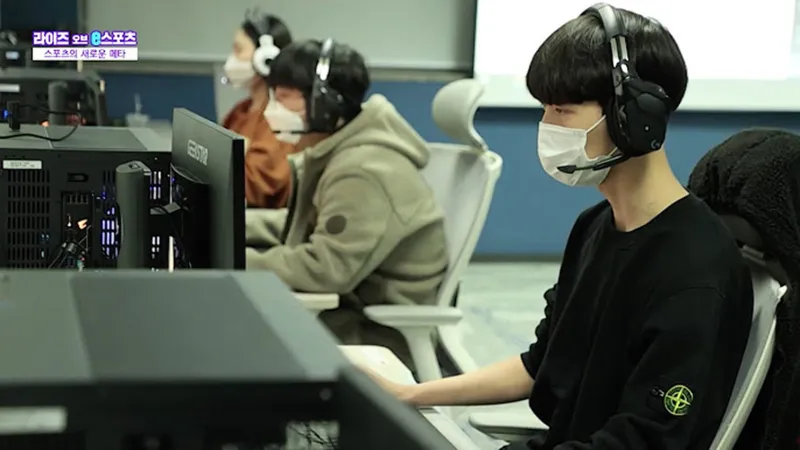
What you won't see is what's happening inside the private Korean community Discord servers, KakaoTalk group chats, and closed practice communities where the real strategic conversation is happening. These aren't shadowy secret societies — they're just normal competitive communities operating on the reasonable assumption that not everything needs to be broadcast publicly.
Coaches and analysts who've worked in both Korean and Western environments have noted a pretty consistent pattern: Korean teams compartmentalize their scrim data in ways that Western organizations often don't. Loss conditions, win conditions, specific counter-picks — these get discussed internally and then locked down. Western teams, historically more open in their content creation and analytical sharing, have sometimes inadvertently telegraphed their own strategic thinking to opponents.
Scrim Culture and the Unspoken Code
The private scrim ecosystem in Korea operates on a set of unwritten rules that outsiders frequently misunderstand. Scrim results don't leak. Specific compositions tested in practice don't get casually discussed on stream. Coaches don't post clip packages of experimental strategies on social media. This isn't because Korean teams are paranoid — it's because there's a shared understanding that competitive information has value, and burning that value for content is a bad trade.
Western teams have gotten better about this, particularly as franchised leagues have brought more professional infrastructure to NA and EU organizations. But the cultural default is still different. American streaming culture rewards transparency and personality-driven content. A Western pro who streams their practice sessions, reacts to their own VODs publicly, and discusses their team's struggles openly is seen as relatable and authentic. In the Korean competitive context, that same behavior would raise some eyebrows.
This isn't a knock on Western content culture — it's just a genuine tension between two different sets of values, and it has real competitive consequences.
Why Western Teams Keep Getting Caught Flat-Footed
Here's the uncomfortable truth that Western esports analysts are slowly coming to terms with: the strategic gap at international tournaments isn't purely a skill issue. It's partly an information gap.
Korean teams arrive at events like Worlds or VCT Champions having stress-tested strategies against elite opponents in controlled environments, with that information carefully contained. Western teams sometimes arrive having revealed their hands — through streams, through analyst content, through social media — in ways that give prepared opponents a meaningful advance look.
There's also a scouting asymmetry. Korean analysts are, by most accounts, more systematic in their study of international opponents. The combination of strong analytical culture, language barrier (which cuts both ways, but favors Korean teams when studying English-language content), and organizational investment in opponent research creates a preparation gap that pure mechanical skill can't always overcome.
Can Western Teams Actually Adapt?
Some are trying. There's been a noticeable shift in how certain NA and EU organizations approach information security, particularly after repeated painful lessons at international events. Scrim NDAs are more common. Content creation boundaries around competitive preparation are being more clearly defined.
But cultural habits are stubborn, and the content economy that Western esports is built on creates real financial pressure to stay open and transparent. A team that goes dark during tournament prep might lose streaming revenue and fan engagement. That's a genuine cost that Korean organizations, operating in a different content ecosystem, don't always face to the same degree.
For US fans watching this dynamic play out, the takeaway is worth sitting with: the Korean strategic edge isn't just about mechanical excellence or better training regimens. It's about a competitive culture that treats knowledge as a resource to be protected, not freely shared. Until Western teams fully internalize that lesson — not just intellectually, but operationally — the invisible playbook will keep catching people off guard.