Stop Rage Quitting, Start Grinding: How Korean Practice Culture Is Changing the Way American Gamers Improve

Photo: Julie Edgley, CC BY-SA 2.0, via Wikimedia Commons
We've all been there. You're three losses deep in ranked, your teammates are inting, your mechanics feel off, and the next game in your Steam library is looking real attractive right now. So you close the client, tell yourself you'll come back when the game is less broken, and spend the next week playing something completely different.
That cycle is basically the American gaming experience in a nutshell. And honestly, for most people, it's totally fine — gaming is supposed to be fun, not a second job.
But for the players who actually want to improve? That cycle is a trap. And a growing segment of the US gaming community is starting to realize that Korea figured out an alternative a long time ago.
The Mentality Gap Is Real
Korean gaming culture — particularly the competitive side that grew out of the PC bang era and professional StarCraft leagues — is built around a fundamentally different relationship with failure. Where American gaming culture tends to externalize frustration (bad teammates, broken meta, rigged matchmaking), Korean competitive culture pushes players to internalize it. Not in a self-destructive way, but in a genuinely analytical one.
The question isn't 'why is this game unfair?' It's 'what did I do that I could have done differently?'
That sounds simple, maybe even obvious. But actually living by it requires a level of ego management that most people underestimate. Admitting that you made the mistake — even when your teammate also made a mistake, even when the game is genuinely unbalanced — is uncomfortable. Korean practice culture treats that discomfort as the whole point.
The grind isn't just about putting in hours. It's about putting in the right hours with the right mindset.
What the Korean Practice Routine Actually Looks Like
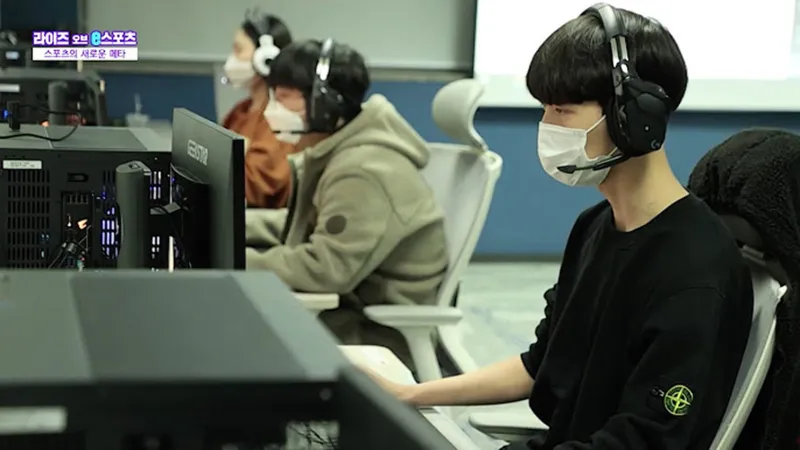
For professional Korean players, the practice day is highly structured in a way that would feel alien to most American gamers. Morning scrimmages are followed by film review sessions where every significant decision gets examined — not just the ones that went wrong. Then individual practice blocks, more scrimmages, more review. Coaches are involved at every stage.
Obviously, most American players aren't going pro. But the principles behind that structure are being adopted at every level.
Replay review is the big one. Korean players — even amateur ones grinding solo queue — watch their own replays. Regularly. With intention. Not just to cringe at their worst moments but to identify specific patterns: Do I consistently misposition in the mid-game? Am I too passive in early skirmishes? Am I tilting after the first death and playing differently as a result?
That kind of self-scouting is something American streamers and competitive players are increasingly talking about publicly. And some of them have the receipts to show it works.
American Players Who Made the Switch
Talk to anyone in the North American ranked grind community who has made a serious climb in the last couple of years, and a surprising number of them will mention some version of 'I started watching my own replays' or 'I stopped switching games every time I hit a wall.'
Streamers who cover ranked improvement content have built entire audiences around this shift. Channels dedicated to replay analysis, mistake identification, and structured improvement plans have exploded in popularity — and many of them explicitly credit Korean competitive culture as the inspiration.
One common theme among American players who adopted Korean-style practice habits: the improvement isn't instant, and that's actually the point. The whole framework requires accepting that skill development is slow, nonlinear, and sometimes invisible until suddenly it isn't. That patience is genuinely countercultural in an American gaming landscape that rewards novelty and punishes stagnation.
A player who spent a year grinding one game with intentional practice in a Korean-influenced routine will typically outperform someone who played double the hours across five different titles. The depth compounds.
The Streaming Economy Complicates Things
Here's where it gets messy. American streaming culture has a built-in incentive to not adopt Korean grind mentality, at least not fully.
Variety is rewarded on platforms like Twitch and YouTube. Viewers like seeing new games. A streamer who plays the same game every day for six months while slowly grinding ranked might be improving dramatically as a player, but they're probably not growing their audience as fast as someone who hops between whatever is trending.
This creates a real tension. The streamers who have managed to thread that needle — building audiences around the journey of improvement rather than the novelty of new games — are doing something genuinely interesting. They're essentially gamifying the Korean grind for an American audience, making the process of self-analysis entertaining rather than just productive.
It's not easy, and not everyone pulls it off. But it's happening, and it's changing how a chunk of the American gaming audience thinks about skill development.
Why This Matters Beyond Just Getting Better at Games
The broader cultural shift here is worth noting. Korean gaming culture's emphasis on methodical improvement, honest self-assessment, and long-term commitment to craft is essentially a set of values that translate well beyond gaming.
American players who adopt this mindset often talk about how it changes their relationship with failure in other areas of their lives. The muscle you build by watching a replay of your worst game and honestly cataloging your mistakes is the same muscle you need for any kind of serious self-improvement.
Nobody's saying you need to quit having fun or that rage quitting is a moral failing. But if you've ever hit a skill ceiling and wondered why you can't break through it — the Korean answer has been sitting there the whole time, and more American gamers are finally starting to listen.