Lost in Translation: The Real Language Gap Between International Fans and Korean Esports
Here's a scenario a lot of US esports fans know too well: your favorite Korean player just had an incredible performance, and you want to see what the Korean fan community is saying about it. You open Twitter, find the Korean hashtag, and stare at a wall of characters you can't read. You run it through Google Translate. The output is... technically English, but something got lost. You close the tab.
That's the language barrier in miniature. And it's costing international fans a huge amount of the richness that makes Korean esports culture worth following in the first place.
How Deep Does the Gap Actually Go?
It's not just about not understanding Korean broadcast commentary, though that's the most obvious friction point. The language gap runs through basically every layer of fan engagement.
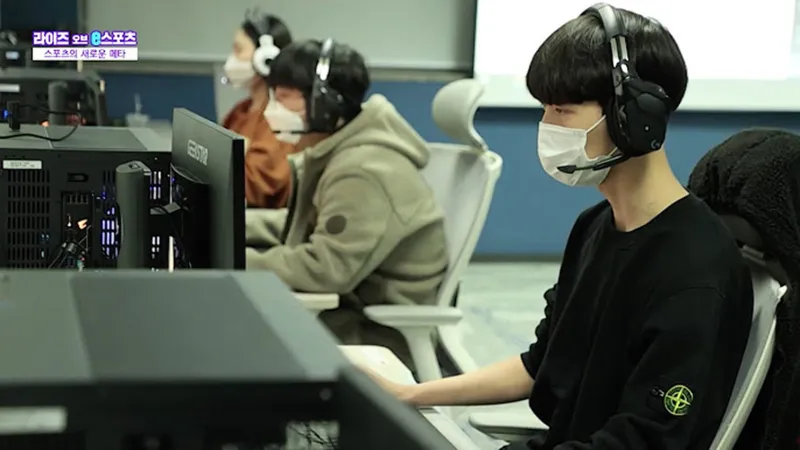
Korean esports teams run most of their social media primarily in Korean. Their fan cafes — a uniquely Korean form of organized fan community that operates through platforms like Daum Cafe — are almost entirely Korean-language spaces. Player livestreams on platforms like AfreecaTV or Chzzk are conducted in Korean, with Korean-speaking moderators, Korean-language chat, and Korean fan interactions that don't get translated.
Even the memes are different. Korean esports fan culture has its own visual language, its own recurring jokes, its own iconic moments that get referenced constantly — and if you didn't absorb them in Korean, a lot of the humor and cultural shorthand just doesn't land when it gets translated.
"International fans often see the product," one English-speaking Korean pro explained in a community Q&A last year. "But Korean fans see the whole story. The journey. The inside jokes. The history. It's a different experience."
The Cast Commentary Problem
Broadcast commentary is where the gap is most viscerally frustrating for international viewers. Korean casters are genuinely excellent — the craft of Korean esports broadcasting has been refined over two decades, and the best Korean casters bring a level of technical knowledge and emotional investment that's hard to match.
But English coverage of Korean leagues has historically been inconsistent. The LCK has improved significantly with its English broadcast desk, and Riot's investment in international coverage has made a real difference for League of Legends fans. But for other Korean leagues and titles — Korean Valorant, Korean PUBG, Korean fighting game circuits — English coverage is often nonexistent or handled by volunteer community members doing their best with limited resources.
The result is that US fans following non-LoL Korean esports are often watching matches in silence, or with Korean commentary they can't follow, piecing together what happened from post-match Twitter threads and translated clip highlights.
What Some Organizations Are Actually Doing About It
The picture isn't entirely bleak. A few organizations and platforms have made genuine commitments to bridging the gap.
T1 is the obvious example — their English-language social media presence is robust, they've made clear efforts to produce content that serves international fans, and players like Faker have participated in enough English-language interviews over the years that international fans have a real sense of who he is beyond his in-game performance. That didn't happen by accident; it reflects a deliberate organizational choice to treat international fans as a real constituency.
Gen.G has made similar moves, partly driven by their US-based ownership structure. Their content team actively produces English-language material, and they've been thoughtful about creating touchpoints for fans who can't engage in Korean.
On the broadcast side, the LCK's English desk has gotten meaningfully better. Casters like Atlus and Spawn have built real followings among international fans and bring genuine Korean esports knowledge to their work — not just a translation of what's happening on screen, but actual cultural and competitive context.
English-Speaking Korean Pros: The Bridge Builders
Some of the most valuable figures for international fan communities are the Korean pros who speak English fluently and are willing to use it publicly. They function as cultural translators in a way that official organizational content can't fully replicate.
Players who've spent time in Western leagues, or who grew up with significant English-language exposure, often have a different relationship with international fans — they understand what context is missing and can fill it in in ways that feel genuine rather than corporate.
"When I post in English, I get to show a side of myself that Korean fans already know but international fans have never seen," one Korean pro who played in both the LCK and LCS described it. "My personality, my humor, my actual opinions. The language barrier makes me seem more serious than I am."
That observation gets at something important: the language barrier doesn't just limit information flow. It flattens Korean players into their performance stats for fans who can't access the surrounding context. The players become their mechanics rather than their full selves.
Practical Tips for Closing the Gap Yourself
If you're a US fan who wants to go deeper into Korean esports culture without waiting for organizations to do all the work, here's what actually helps:
Learn the basics. You don't need to be fluent in Korean to improve your experience significantly. Even a working vocabulary of a few hundred words related to gaming and esports will make Korean Twitter and stream chat more navigable. Apps like Duolingo are fine for this; Anki with a gaming-specific deck is better.
Find bilingual community members. Korean-American gaming communities, particularly on Discord and Reddit, often have members who are fluent in both languages and genuinely enjoy helping bridge the gap. These communities are worth joining even if you never ask a question — just reading the conversations is educational.
Use DeepL instead of Google Translate. For Korean specifically, DeepL tends to produce more natural-sounding translations that preserve more of the original meaning. It's not perfect, but it's a meaningful upgrade.
Follow Korean esports journalists who write in English. There are a handful of writers and analysts who cover Korean esports specifically for international audiences and do it well. Finding them and turning on notifications is one of the highest-leverage things you can do.
Engage with Korean fan communities even if you can't communicate fluently. Emojis, game-specific terminology, and basic Korean phrases go a long way. Korean fan communities are generally welcoming to international fans who make a genuine effort, even an imperfect one.
The language barrier is real. But it's more permeable than it looks from the outside — and the Korean esports community waiting on the other side of it is absolutely worth the effort to reach.